
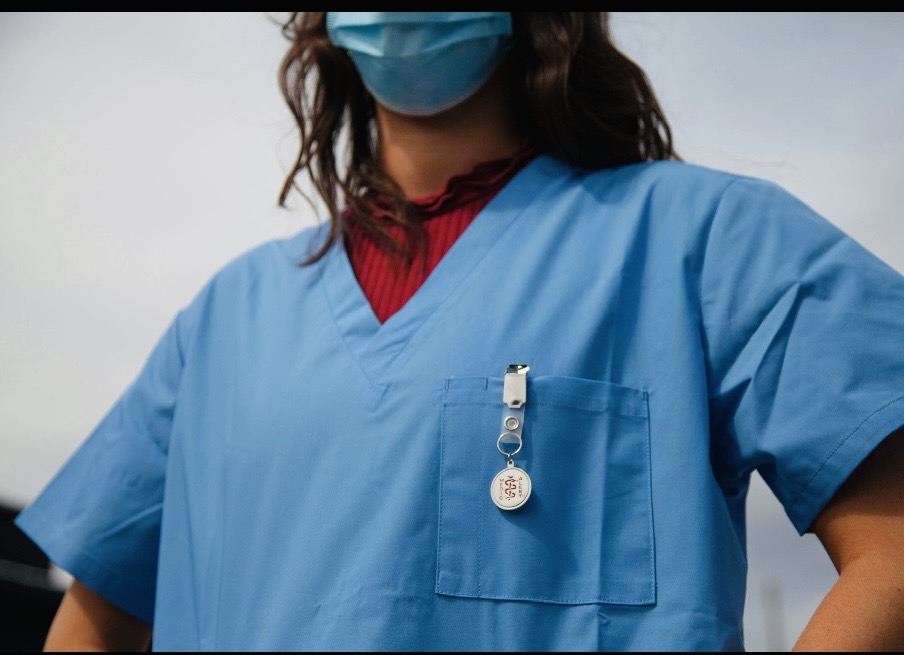
Recently I was in hospital. As I waited to be seen, I looked down at the striped blue hospital gowns worn by a handful of patients in the waiting area. I’d never really thought about them before, but in that moment I found myself wondering why, for certain visits, patients are required to wear hospital gowns.
From where I sat, there were two distinct sets of clothing. There were the clothes worn by the patients and those worn by the medical professionals. As I looked around, mostly to pass the time, my mind wandered. There was no one to speak to—or, more truthfully, no one nearby looked in the mood for small talk. Well, almost no one. There was one cheerful, well-mannered little old lady who spoke some of the politest words to a stranger I have heard in a long time. Her comment didn’t require much of a response from me. I simply smiled and nodded in agreement before she disappeared through the restroom door.
Then I returned to my thoughts.
Clothing is important. In certain settings and professions, being properly dressed is everything. In that hospital corridor, if you were wearing a patient gown, it meant at least two things: you were there as a patient, and you were there to be examined or cared for medically. Conversely, if you were wearing medical attire, you were a member of staff, there in one capacity or another to care for the wellbeing of patients.
The clothing immediately identified a person’s purpose.
It made me think about us as Christians. If we are clothed in the righteousness of the Most High God, then we are here to represent the Kingdom of our Father.
Later, I did a little research into healthcare gowns. I discovered that they can broadly be divided into two categories: medical gowns and patient gowns. Medical gowns provide protection and coverage for healthcare professionals, while patient gowns are designed to preserve dignity, provide comfort and allow healthcare workers easy access while caring for the patient.
Even among medical gowns there are different levels of protection. Non-surgical and surgical gowns are designed for different levels of risk. Some gowns are worn only in highly controlled environments where the risk of contamination or exposure to bodily fluids determines the type of clothing required. Who could forget the hazmat suits worn by healthcare professionals during the COVID pandemic?
The clothing a medical professional wears often indicates both their purpose and, to some extent, their authority within the hospital. Along with the correct identification, it allows them access to areas that others cannot enter. We’ve all seen films where someone trying to infiltrate a hospital, for good or bad reasons, slips on a doctor’s coat in an attempt to blend in.
Just as clothing matters in the medical field, the Bible reminds us that our spiritual clothing matters too. It reveals who we belong to and reflects the God we follow.
Ephesians 4:24 tells us:
“Put on the new self, created after the likeness of God in true righteousness and holiness.”
Throughout Scripture, clothing often represents identity, protection and belonging.
The armour of God in Ephesians 6 is a set of spiritual garments we are instructed to put on. Just as medical gowns are designed for protection, God’s armour protects us spiritually—but we still have to put it on.
The Bible also tells us that we are clothed with salvation and righteousness. We are, in a sense, wearing God’s own branding. It reminds us that we belong to Him and that Christ’s righteousness has been credited to us. Those garments speak of our identity, our calling and our purpose.
Isaiah 61:10 beautifully declares:
“I delight greatly in the Lord; my soul rejoices in my God. For he has clothed me with garments of salvation and arrayed me in a robe of his righteousness, as a bridegroom adorns his head like a priest, and as a bride adorns herself with her jewels.”
God’s clothing outlasts this world. Revelation 3:5 gives this wonderful promise:
“The one who is victorious will, like them, be dressed in white. I will never blot out the name of that person from the Book of Life but will acknowledge that name before my Father and his angels.”
We can hold on to that promise. When all is said and done, everyone who has placed their complete faith and trust in Jesus will be dressed in white —a symbol of forgiveness, overcoming and belonging to the family of God.
Revelation 7:9 paints the final picture:
“After this I looked, and there before me was a great multitude that no one could count, from every nation, tribe, people and language, standing before the throne and before the Lamb. They were wearing white robes and were holding palm branches in their hands.”
Clothing matters.
In some settings, wearing the right clothing can mean the difference between life and death.
In the Garden of Eden, after the first man and woman sinned, they stitched together fig leaves to cover their shame. Their efforts were sincere, but they were never sufficient. God Himself made garments of skin for Adam and Eve, shedding innocent blood to cover them for a season.
That pointed forward to the true Lamb of God.
When Jesus shed His blood on the cross, He provided the only covering that could truly deal with the sin and shame of humanity. Through His sacrifice, the garments of God’s righteousness became available to everyone who believes in His name, clothing us with forgiveness, dignity, purpose and an eternal identity.
So today, take a moment to thank Jesus that He lived and died to clothe you so well.
And if you have not yet placed your trust in Him, perhaps let this be the gentle nudge your heart has been waiting for.
While I have you for a minute, have you registered for the upcoming DNA- Desired Not Abandoned 2026 Conference happening on 19 September? Check out the details here, spaces are filling up fast. And to everyone who has signed up, thank you! I look forward to welcoming you all.
Thank you for reading.
Emi x

Recent Comments